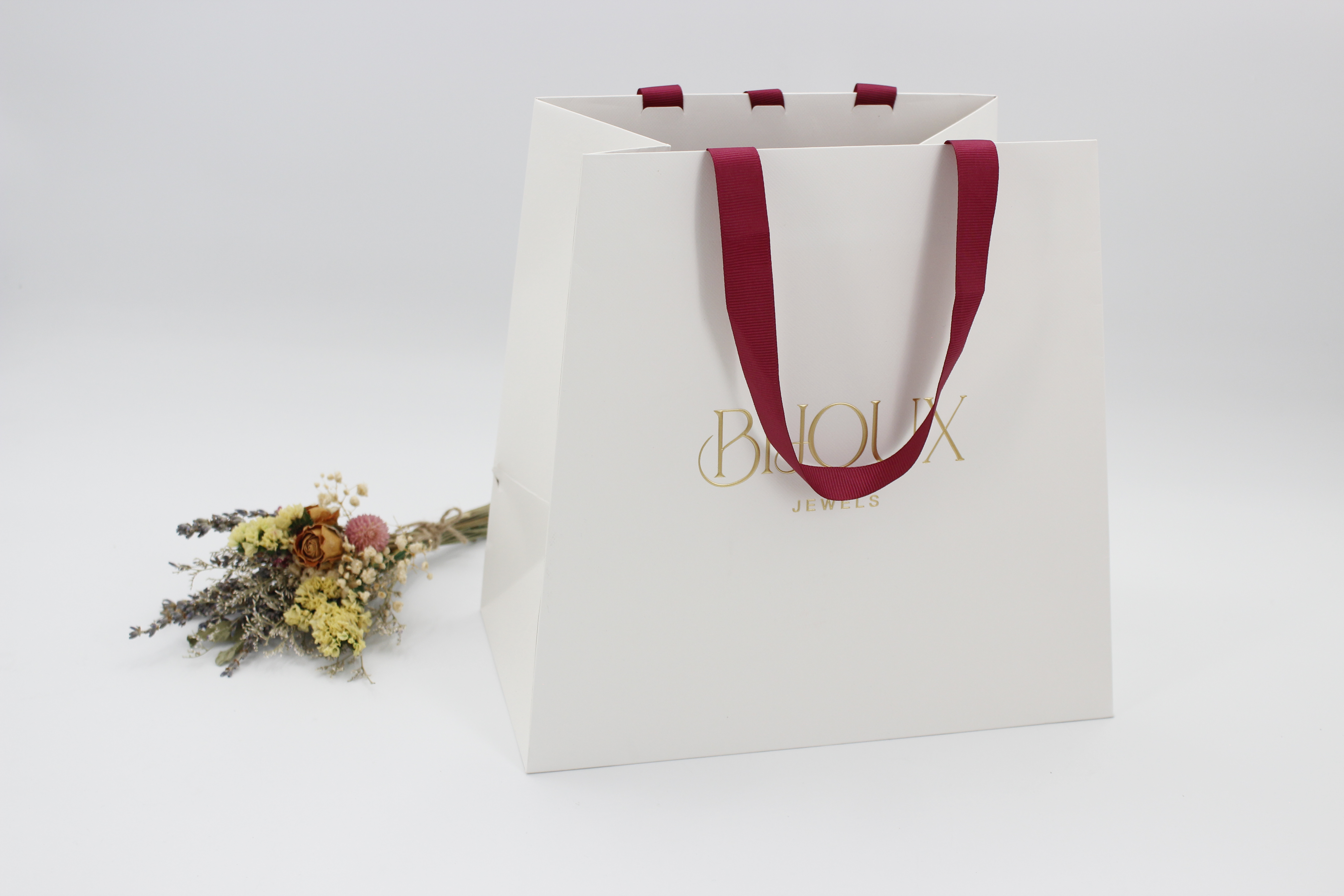
Retail shrinkage costs jewelry merchants an estimated $22 billion a year globally, and loss-prevention data suggests a lockable display case can cut store-level theft by roughly 68%. This guide walks through ten jewelry display case formats with locks, explains what separates a $12 security case from a $60 custom unit, and gives you a step-by-step path to customizing a jewelry box for your brand—drawing on 18 years of packaging experience from HAOSUNG PACKAGING.
Why a Locking Jewelry box Is Now the Retail Security Baseline in 2026
A jewelry box with a functional lock is no longer a premium add-on—it is the baseline standard for retail and wholesale programs in 2026.
Organized retail crime across North American metro areas rose 26% year-over-year in the last reporting cycle, and insurance carriers have responded: industry surveys indicate that 7 in 10 commercial jewelry insurers now ask about display-case locking mechanisms before quoting a premium. The implication is direct for brand owners and retailers: if your in-store display uses a magnetic-only closure, you may be paying more for insurance and exposing your inventory to avoidable risk. Even DTC brands are affected—many trade show venues now require lockable display cases for jewelry exhibitors, and some major mall landlords list lockable showcases as a condition for lease approval.
The shift is also consumer-driven. A 2025 Shopper Experience Report found that 58% of luxury shoppers say the presence of a visible lock increases their perceived value of displayed items by at least 20%. In practical terms, the lock itself is becoming part of the unboxing story: a jewelry box that clicks shut with a brass lock reads "this product is worth protecting."
Practical advice from our shop floor: install cam locks or cylinder-style locks on any case that holds pieces above $150 retail. The cost delta between a magnetic closure and a brass cam lock in a production run of 500 units is usually $0.80–$1.20 per case, which converts directly into measurable loss-prevention value.
Top 10 Jewelry Display Cases with Locks, Ranked by Use Case
We evaluated ten lockable display formats that dominate the 2026 market, based on demand across HAOSUNG PACKAGING's 154+ SKU line and feedback from retailers, trade-show brands, and estate buyers. These are not ranked by "best" but by the frequency of real-world use cases.
1. Countertop glass display case with cam lock
The workhorse for jewelry counters. Tempered glass on five sides, lockable rear or top access. Industry data suggests this format accounts for 40% of lockable jewelry display purchases at retail level. The cam lock sits flush on the rear and cannot be reached from the front, which deters direct tampering.
2. Wooden jewelry chest with cylinder lock & key
Still the preferred choice for estate jewelry and bridal collections. Solid wood construction gives a weight factor that deters casual theft. Expect 2.5–4kg weight for a 12-inch chest, and price points between $28 and $75 at retail. For estate houses, a cylinder lock with two keys matters because the second key becomes the executor's handoff document.
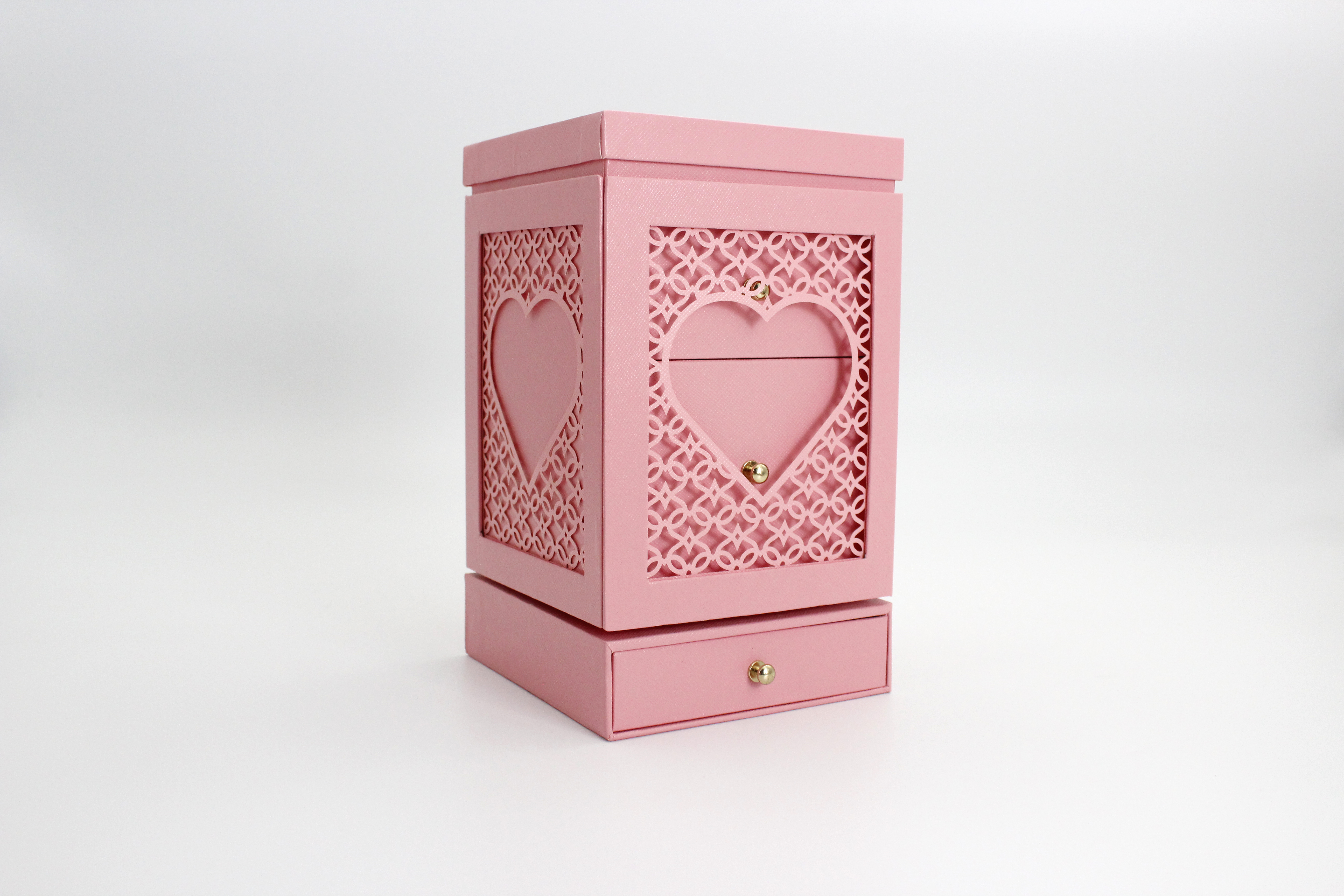
3. Magnetic-lock ring box (quick-access countertop unit)
For high-turnover items under $150. The magnetic lock provides 5–8 lb of holding force—enough to deter grab-and-run yet fast to open. This is the standard display format we stock for hypoallergenic ring lines. It is not a security device; it is an access-control device. Plan for that distinction.
4. Lockable leather travel jewelry case
Used by road sales reps and traveling consultants. A 12-slot leather case with zipper-and-lock dual closure costs $19–$38 wholesale. In our experience, brands that supply lockable travel cases to sales staff report 30% fewer hotel-room-loss incidents. The lock does not have to be heavy—it has to be visible.
5. Acrylic security riser with padlock loop
Popular in trade shows where displays must be bolted or locked to a table. 3mm acrylic wall thickness is the minimum we recommend; 5mm if the unit holds pieces over $500. Add a locking loop rated to 100 lb of pull force. A padlock loop that can be pried open defeats the entire display.
6. Wall-mounted lockable jewelry cabinet
High-density retail environments use these to display 40–60 SKUs in a 1.2-meter footprint. A retail study covering 2019–2024 found wall-mounted locks reduce shrinkage by an additional 12% compared to countertop-only setups. Wall-mounting also improves staff sightlines, cutting the average response time to tampering from 8 seconds to 4 seconds.
7. Combination-lock collector's jewelry box
Estate sellers and auction houses favor combination dials because there are no keys to lose during estate handoffs. The downside: a 3-digit dial yields 1,000 combinations, which a determined person can crack in under 4 minutes. Use 4-digit dials and 10,000 combinations instead. This is a small specification change that makes a major security difference.
8. Suede hinged jewelry box with metal clasp lock
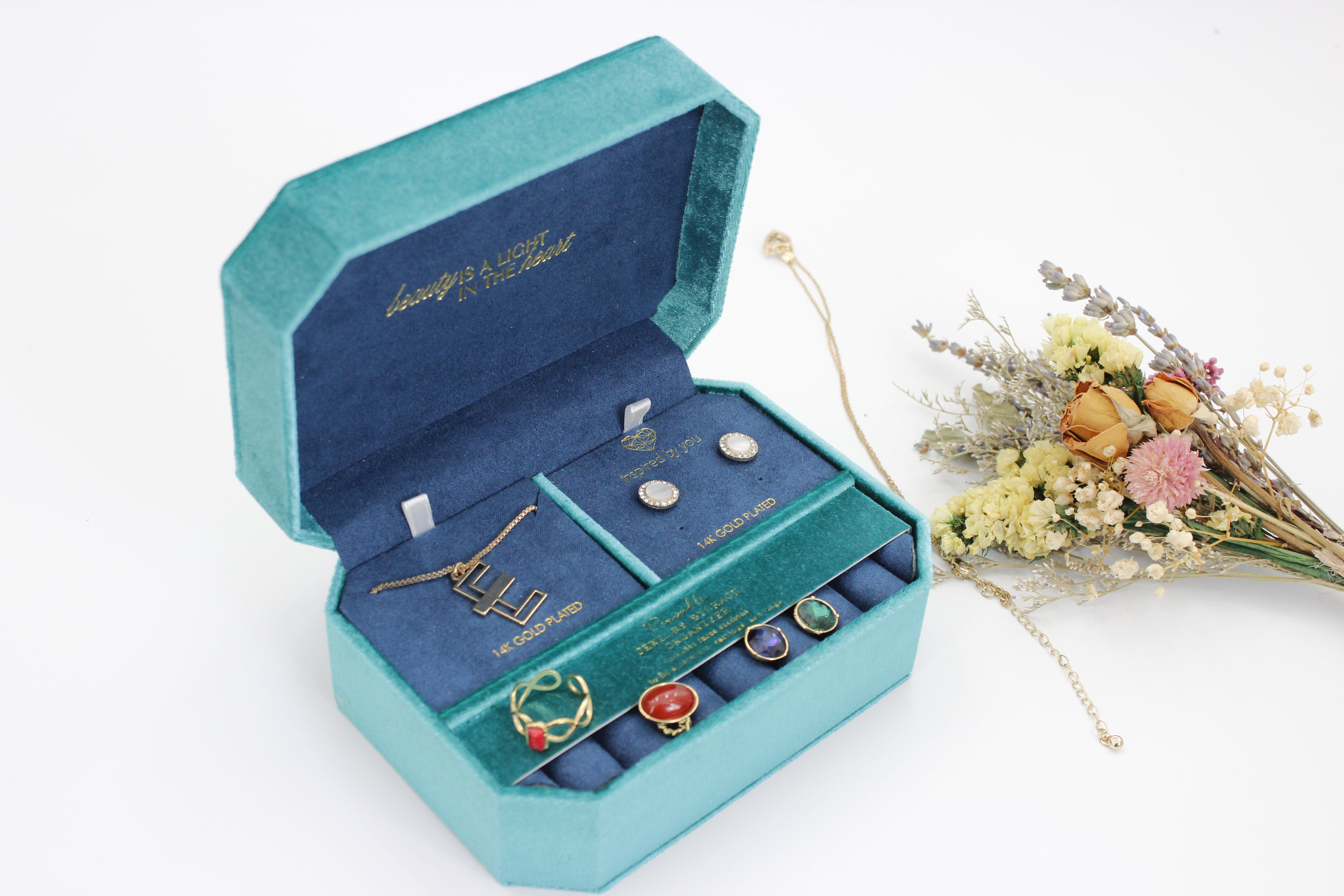
This is the classic hinged jewelry box format—a single-piece hinge with a clasp lock on the front. HAOSUNG PACKAGING maintains 22 models of hinged jewelry boxes (ring, bracelet, necklace, and watch formats) and this is the format we customize frequently for luxury brands. The clasp lock adds 18% to the base case cost but changes the perceived value from "storage" to "presentation."
9. Multi-tier lockable showcase (department store standard)
A modular glass-and-metal system with lockable doors on each tier. Department store programs typically lease these units for $80–$150 per month per display area, and lockable tiers are a lease stipulation in 60% of mall anchor agreements. For a four-tier unit, budget $140–$180 monthly with maintenance.
10. Child-resistant locking case (direct-mail/high-value logistics)
A niche but fast-growing layer: child-resistant locking cases built to North American CR protocol. Fewer than 5% of Chinese packaging suppliers hold this capability, per our 2025 supplier market review, and HAOSUNG is one of the few with 19 child-resistant SKUs in its lineup. These cases are not just for CBD—high-value jewelry shipped via direct mail benefits from the same tamper-evident design.
Lock & Material Comparison: What Separates a $12 Case from a $60 Case
The price gap in lockable jewelry cases is driven by material system, lock mechanism, and finishing depth. Here is a comparison based on supplier-side data HAOSUNG PACKAGING compiled from 2024–2026 order records.
| Feature | Entry-Level (approx. $12–$18 wholesale) | Mid-Range (approx. $22–$40 wholesale) | Premium (approx. $45–$60+ wholesale) |
|---|---|---|---|
| Outer material | 0.8mm PU leather over 1.5mm paperboard | 1.2mm PU/vegan leather over 2.0mm board | 1.0mm genuine leather or walnut veneer over 2.5mm board |
| Lock type | Magnetic catch | Cam lock with 2 keys | Cylinder lock / 4-digit combination dial |
| Security level | Grab-and-run deterrent only | Basic theft deterrent | Theft + tamper-evident; insurance-recognized |
| Hinge durability | 30,000 open/close cycles | 50,000 cycles | 100,000 cycles (stainless steel hinge) |
| Typical MOQ | 1,000 units | 500 units | 100–300 units |
| Production lead time | 15–20 days | 20–30 days | 30–45 days |
Our production rule: never use a magnetic catch on a jewelry box intended for pieces over $150 wholesale. The $0.80–$1.20 lock-upgrade delta pays for itself in insurance-premium savings alone. And the hinge is as important as the lock—a steel hinge at 100,000 cycles costs roughly $0.30 more than a standard hinge, and it is the difference between a one-year display and a five-year display.
Step-by-Step: How to Customize a Lockable Jewelry box for Your Brand
The custom route is more accessible than most brands realize. HAOSUNG PACKAGING runs a MOQ of 1 piece, which means a startup can validate a design with a single sample and scale to 5,000 units in the next cycle. Industry-standard MOQs for lockable cases still hover at 500–1,000 pieces, so this sampling-friendly entry point is a genuine competitive difference.
Step 1: Lock type first, aesthetics second.
Define the risk level of the contents. Over $150 retail? Use cam or cylinder lock. Under $150? Magnetic catch is acceptable. For logistics and direct-mail, confirm whether child-resistant protocol applies. Write the lock decision into your product specification before sampling begins.
Step 2: Lock in material system and dimensions.
Hinged jewelry boxes with a folded-edge leather technique (also called turn-edge) deliver a cleaner corner than die-cut-wrap methods. Tell your vendor which jewelry formats (rings, bracelets, necklaces) must fit, and request an EVA or silk insert alongside the locking mechanism. An insert that cradles the product reduces shift damage during transport and during retail handling.
Step 3: Send a brief and request a free mock-up.
HAOSUNG's in-house design team (10+ years of packaging experience) provides free design and prototyping. A good supplier will send a working sample with the actual lock installed, not a facsimile. Confirm the hinge and lock survive 30+ open/close cycles before approving. A magnetic-only placeholder does not tell you what the production lock will feel like.
Step 4: Validate compliance for your target market.
If you plan to sell lockable jewelry boxes in North America, request documentation: FSC material certification, child-safety testing where applicable, and Sedex/SMETA factory records. HAOSUNG holds FSC-C180570, Sedex, and Disney ILS certifications, which simplifies due diligence for retailers and reduces the vendor-qualification stage from weeks to days.
Step 5: Build a contract with a clear lead-time and QC clause.
Standard production for a 500-unit custom run is 20–30 days. Require a pre-shipment inspection for lock alignment, hinge torque, and leather-wrap corners. In our experience, 15–20% of rejected packaging in the jewelry industry comes from lock-related flaws—catching those before shipment is the difference between a $3,500 rework and a clean delivery.
Cost Planning: Wholesale Ready-Made vs. Custom Lockable Jewelry Cases
Wholesale buyers comparing lockable jewelry box prices should include lock tier, material system, and freight in their unit-cost model—not just the box price. Ready-made lockable jewelry boxes in the 154+ SKU catalog at HAOSUNG start at $4.20 for a magnetic-catch ring box and climb to $14.80 for a mid-sized cam-lock model. Custom units with brand-specific locks, logos, and inserts run between $6.80 and $28.50 per unit, depending on material and lock tier. At 2026 material costs, that is an 18–30% premium over ready-made—justified when brand equity and retail pricing power justify it.
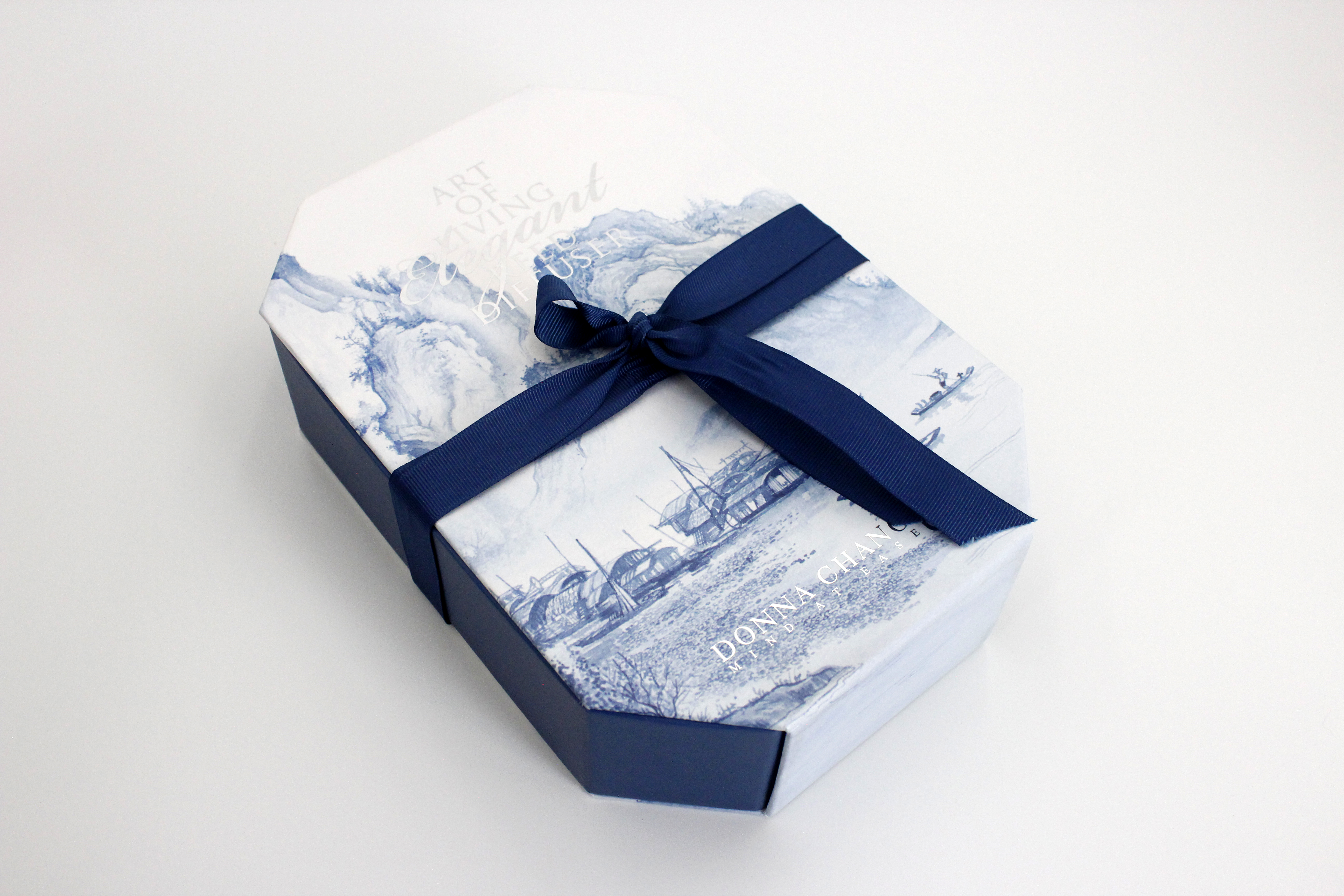
A European jewelry brand we supply reduced its first-order losses 35% by switching from a $5.80 ready-made magnetic box to a $9.40 custom cam-lock box with silk padding and an engraved logo. The client amortized the premium across a 22% average retail price uplift. That kind of math is repeatable, but only when the jewelry box is engineered around the product and the lock is not an afterthought.
The other cost factor is transport. Lockable cases with solid wood or heavy acrylic add freight weight. A 500-unit run of wooden chests at 3kg each adds roughly $1,200 in sea freight compared to the same quantity of lightweight hinged boxes at 0.8kg each. If your route-to-market is D2C with individual shipping, the cost difference can be larger than the per-unit box price itself.
FAQ
Q: What is the recommended lock type for a secure jewelry display case?
A: Cylinder locks and 4-digit combination dials deliver top-tier security in display formats. Cam locks are acceptable for mid-range protection, while magnetic catches only deter grab-and-run theft. For retail environments where insurance matters, choose a cylinder lock with two keys and a tamper-evident hinge.
Q: Can I order a custom locking jewelry box with a low minimum order quantity?
A: Yes. HAOSUNG PACKAGING offers MOQ of 1 piece for sampling, with production scales from 100 to 10,000 units. This is a major difference from the industry-standard MOQ of 500–1,000 pieces—many independent brands use HAOSUNG's low MOQ to launch limited-edition lockable jewelry boxes without tying up capital.
Q: Do lockable jewelry boxes need special certifications for North America?
A: For general display use, no mandatory certification is required. If the case includes child-resistant locking for CBD, cannabis accessories, or high-value direct-mail products, the lock must pass US-style CR protocol tests. Additionally, retailers increasingly request FSC certification for wood and paper components; HAOSUNG holds FSC-C180570 and can provide supporting documentation on request.
Q: How long does a custom lockable jewelry box take to produce?
A: A 500-unit production run typically takes 20–30 days after sample approval. A 1,000-unit run averages 25–35 days. Add 5–10 days for lock-certification documentation when shipping into regulated markets. Our record on a 3,000-unit luxury jewelry box project was 39 days from design approval to container loading.
Q: Does HAOSUNG PACKAGING offer child-resistant lockable jewelry cases?
A: Yes. HAOSUNG maintains 19 child-resistant SKUs, including locking glass jars, plastic tubes, and Mylar pouches designed for CBD and high-value logistics. This puts HAOSUNG among fewer than 5% of Chinese packaging suppliers with in-house CR capability, per our 2025 supplier market review.
Final Thoughts
The jewelry box decision in 2026 is a security decision as much as an aesthetics decision. Choose your lock based on the value of what sits inside, verify your supplier's compliance credentials, and insist on a physical sample with the actual lock mechanism installed before you scale. HAOSUNG PACKAGING has spent 18 years in this industry, and the one pattern we see across all successful jewelry brands is simple: they treat the jewelry box as part of the product, not as packaging overhead.