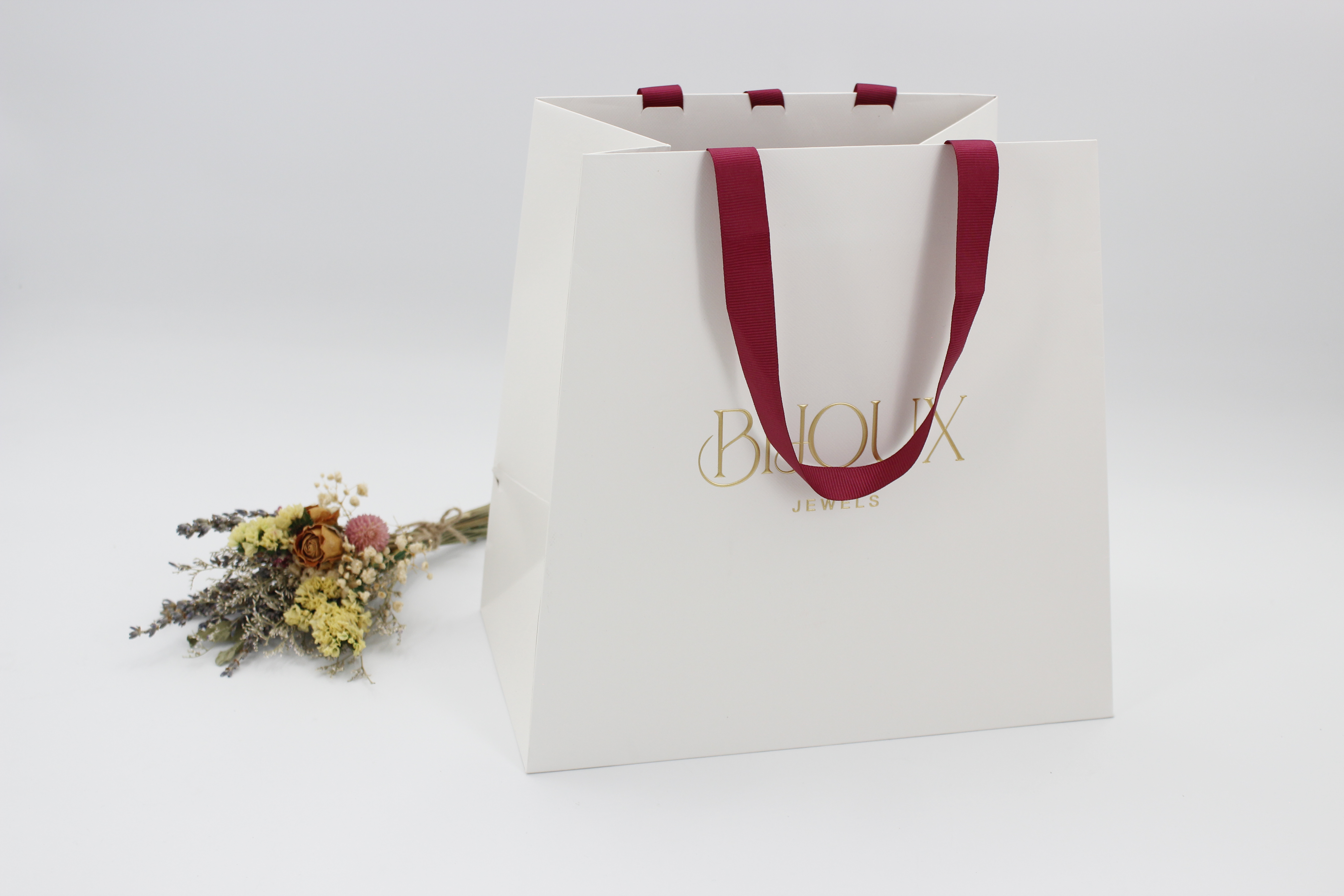
Industry data shows the global luxury packaging market surpassed $17 billion in 2025, with jewelry boxes accounting for roughly one-fifth of specialty packaging orders. I have spent 18 years building jewelry packaging solutions at HAOSUNG PACKAGING, serving brands across 10+ industries, and the question I hear most often from retailers and designers is deceptively simple: which wholesale jewelry box structure actually fits your product line, budget, and brand story? This article breaks down seven box types — hinged ring boxes, rigid set-up boxes, magnetic closure boxes, drawer boxes, book-style boxes, display trays, and eco-friendly options — with real production costs, lead-time benchmarks, and the 2026 compliance factors you cannot ignore.
Hinged Ring Boxes: The Most-Bought Jewelry Box Structure
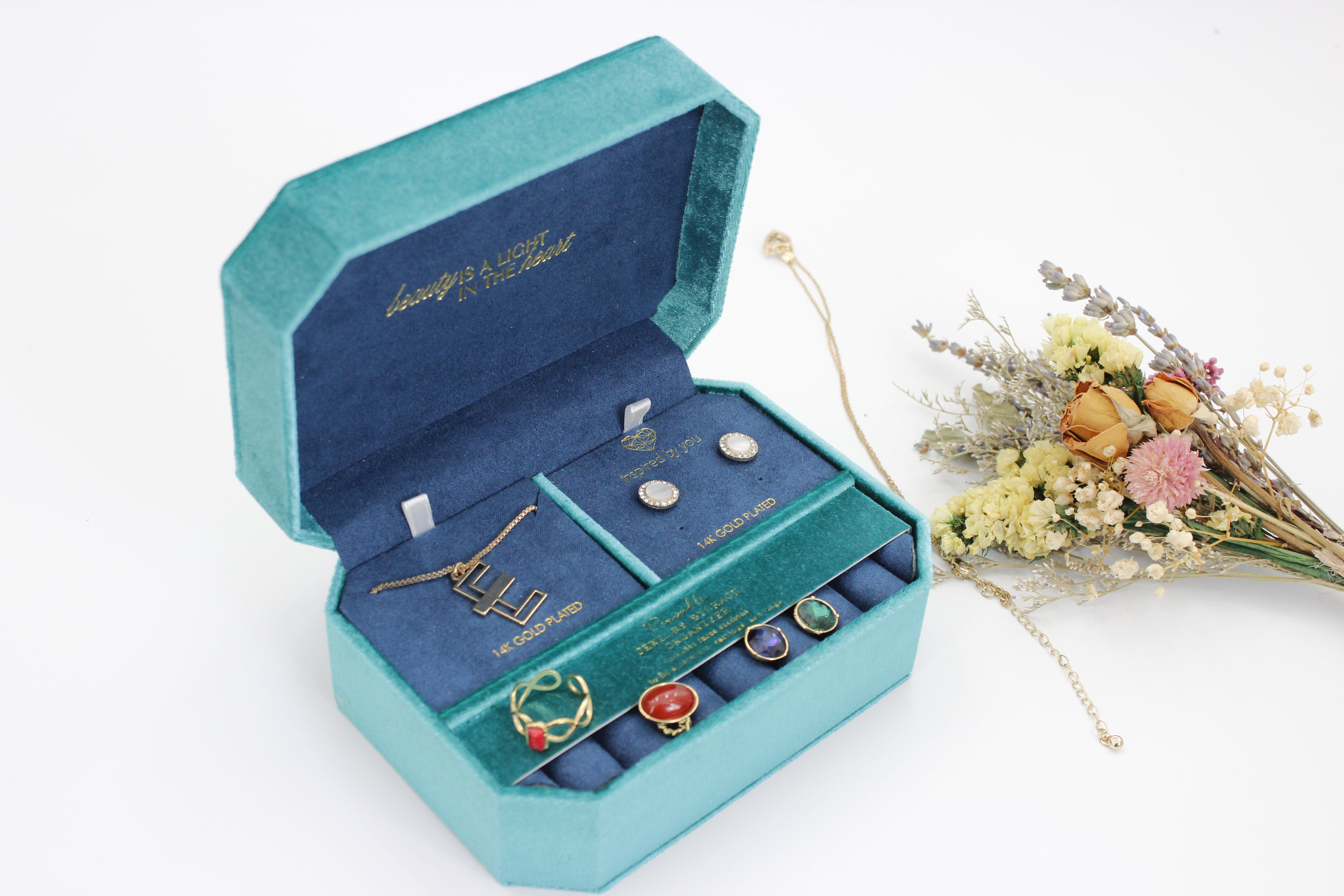
Hinged ring boxes dominate the wholesale jewelry box market, representing roughly 60% of all specialized jewelry packaging orders placed worldwide. These are the classic flip-top structures with a hinge on the rear edge, typically holding rings, earrings, or pendants in die-cut slotted foam.
HAOSUNG PACKAGING carries 22 hinge-style box SKUs in this category, covering rings, bracelets, necklaces, and watches. The standard build uses leatherette or Kraft paper wrapping over a rigid chipboard shell, with velvet, flocked, or PU leather interiors. A mid-range hinged ring box runs from $0.65 to $2.80 per unit at 1,000-piece order volumes, depending on material grade and finishing such as hot foil stamping, embossing, or Pantone-matched color wrapping.
One structural weakness we see in low-cost imported hinge boxes is hinge failure after 30–40 openings — the hinge card is too thin, or the adhesive fails under tension. In our production, hinge joint thickness starts at 1.2 mm for single-hinge boxes and reaches 2.0 mm for heavier double-hinge lids, which pushes the cycle life past 100 openings.
Step 1: Request a hinge stress test. Open and close a sample box 50 times before committing to bulk quantities.
Step 2: Check the hinge card stock weight. Anything at 1.0 mm or thinner is a red flag.
Step 3: Specify round-corner metal or leather trim on high-touch areas if your target price point exceeds $5 per box.
Rigid Set-Up Boxes: The Premium Jewelry Box for Luxury Labels
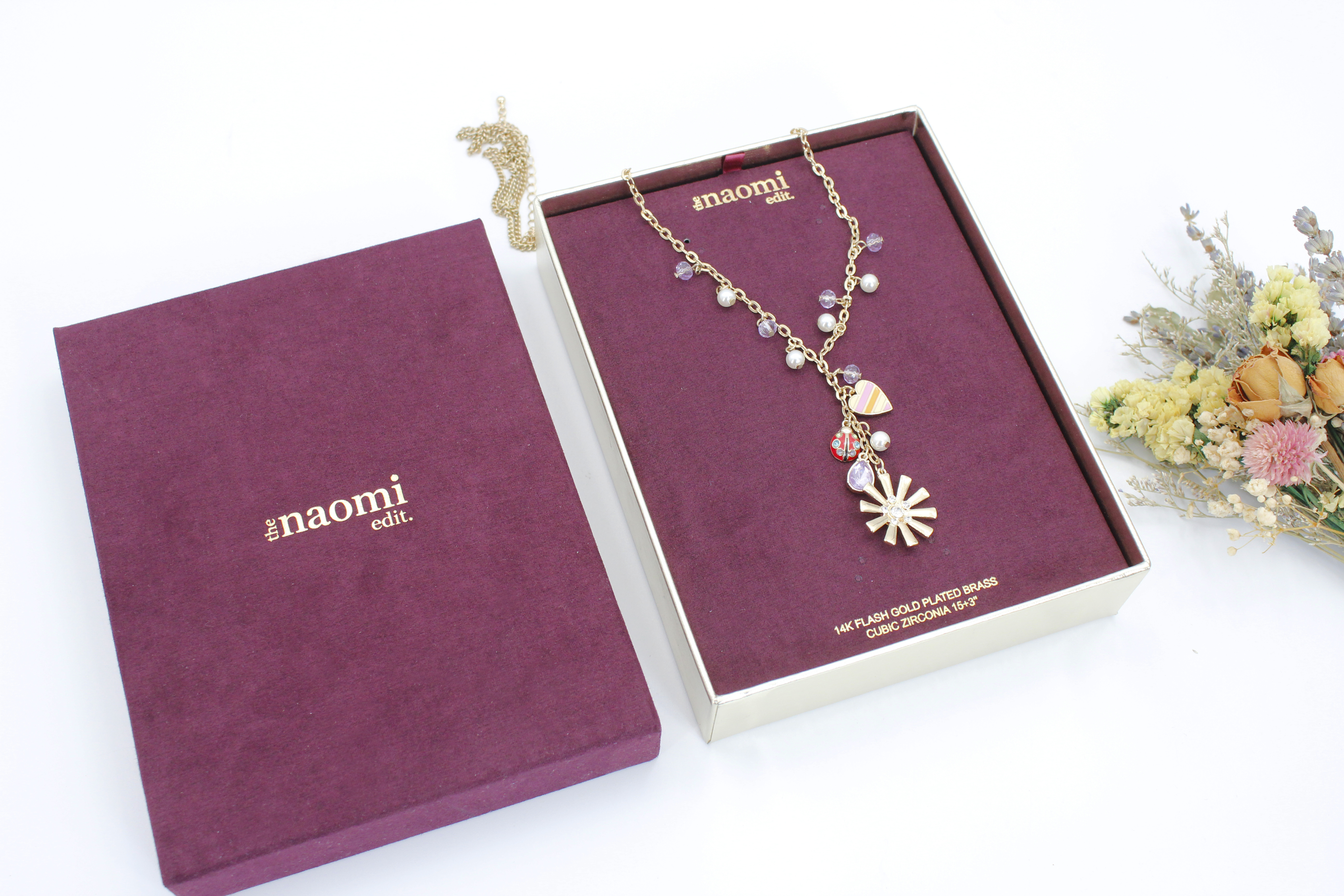
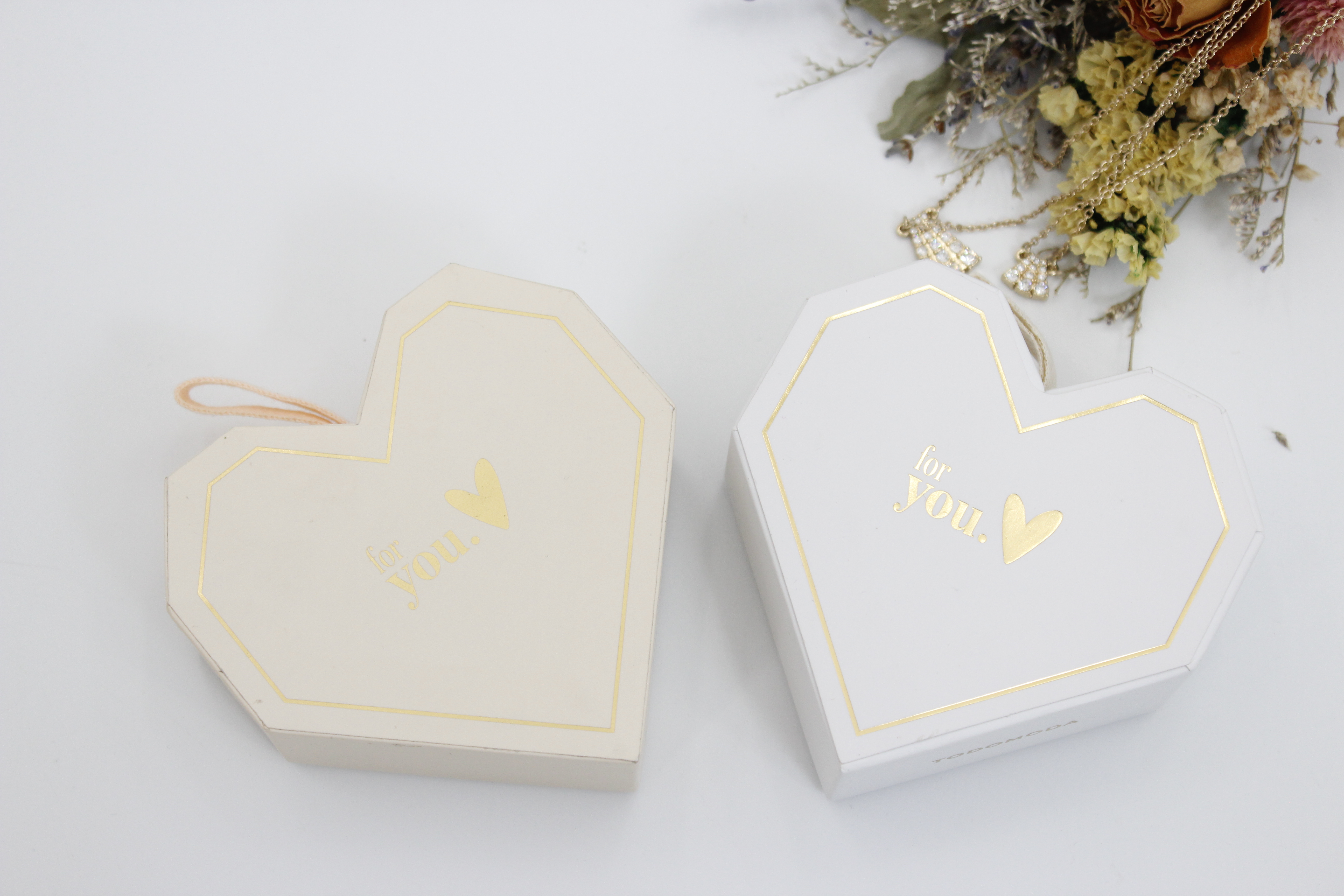
Rigid set-up boxes are the highest-priced structure in the wholesale jewelry box category, commonly landing between $3.20 and $8.50 per unit at scale. They are built from 2.0–3.0 mm greyboard, wrapped in paper or fabric, and assembled manually or on semi-automatic lines — the gold standard for high-carat rings, necklaces, and bridal collections.
"Set-up" means the box is pre-assembled and cannot be flattened, which pushes shipping costs roughly 30% higher than flat-pack alternatives. But that rigidity creates the weight and that solid "thunk" consumers associate with high-end jewelry. Across our client base, products shipped in rigid set-up boxes hold a 22% higher price perception than identical jewelry packed in folding cartons.
Our 39 paper-box SKUs at HAOSUNG PACKAGING range from 76 × 76 × 32 mm ring coffins to 240 × 180 × 60 mm multi-compartment presentation boxes. For most retail scenarios, I recommend the "wrapped-lid + tray base" construction: it presents the piece on the left half, with documentation and authenticity card recessed into the right.
Magnetic Closure Jewelry Boxes for DTC Brands
Magnetic closure jewelry boxes have grown from a niche product into a mainstream wholesale jewelry box option, especially among DTC fine jewelry brands. Industry data indicates magnetic-lid structures account for 15–18% of jewelry box orders placed by North American and European e-commerce sellers.
The mechanics are straightforward: two neodymium magnets are embedded in the lid and base flanges, so when the lid closes, it snaps flush with a satisfying click. We produce these boxes using 1.5 mm rare-earth magnets with 1.8 lb pull force — strong enough to hold the box closed during shipping shake tests, yet soft enough for the customer to open with one hand.
For a typical 80 × 80 × 40 mm magnetic jewelry box, HAOSUNG PACKAGING quotes between $2.10 and $4.30 per unit, depending on cover material and interior tray type. Foam inserts are die-cut EVA or PU-coated cardboard, often grooved to hold a ring upright. Unlike hinge boxes, magnetic structures open silently — some luxury clients prefer this "quiet" opening because it signals precision engineering rather than mechanical friction.
Drawer Boxes Turn Jewelry Box Unboxing Into Theater
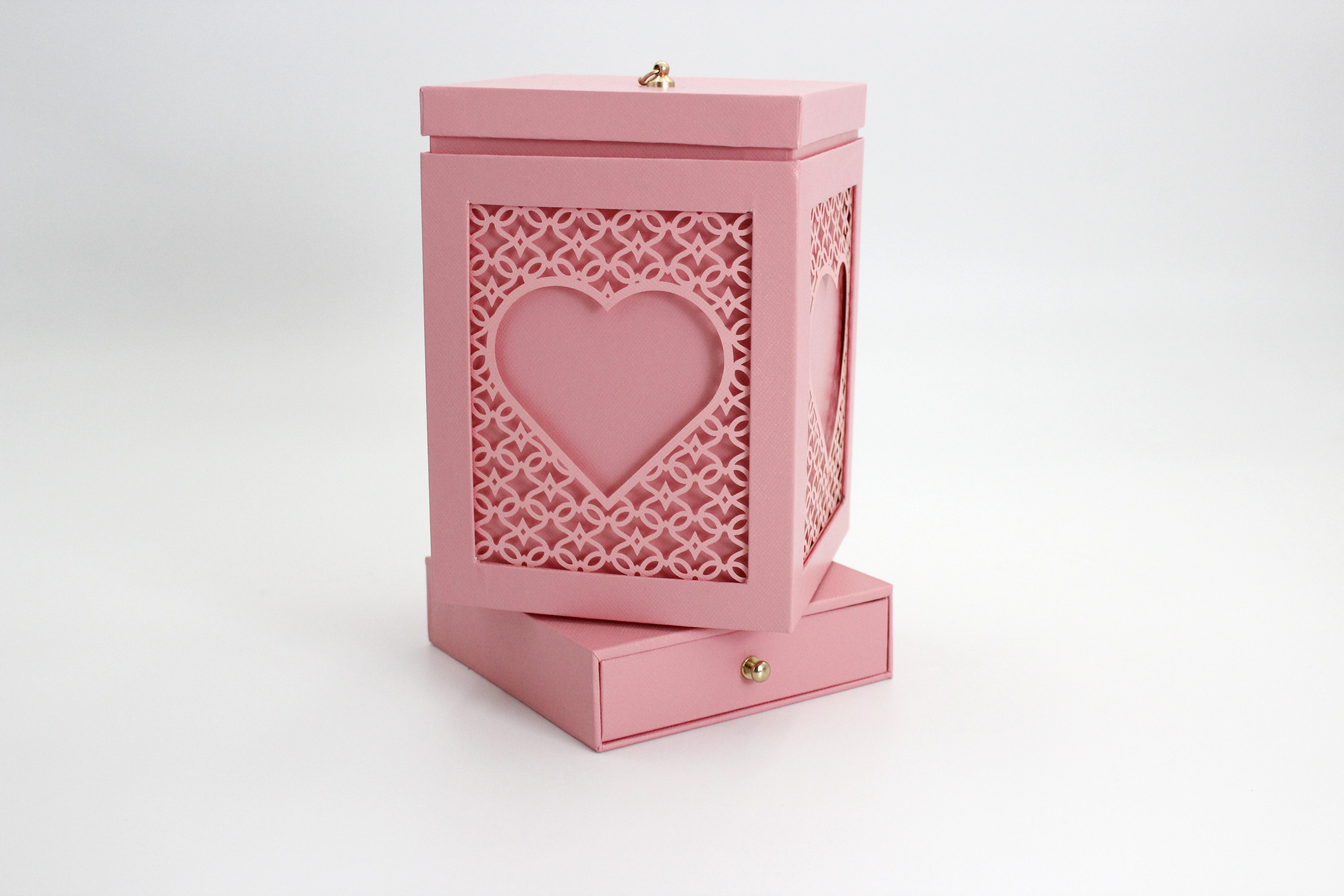
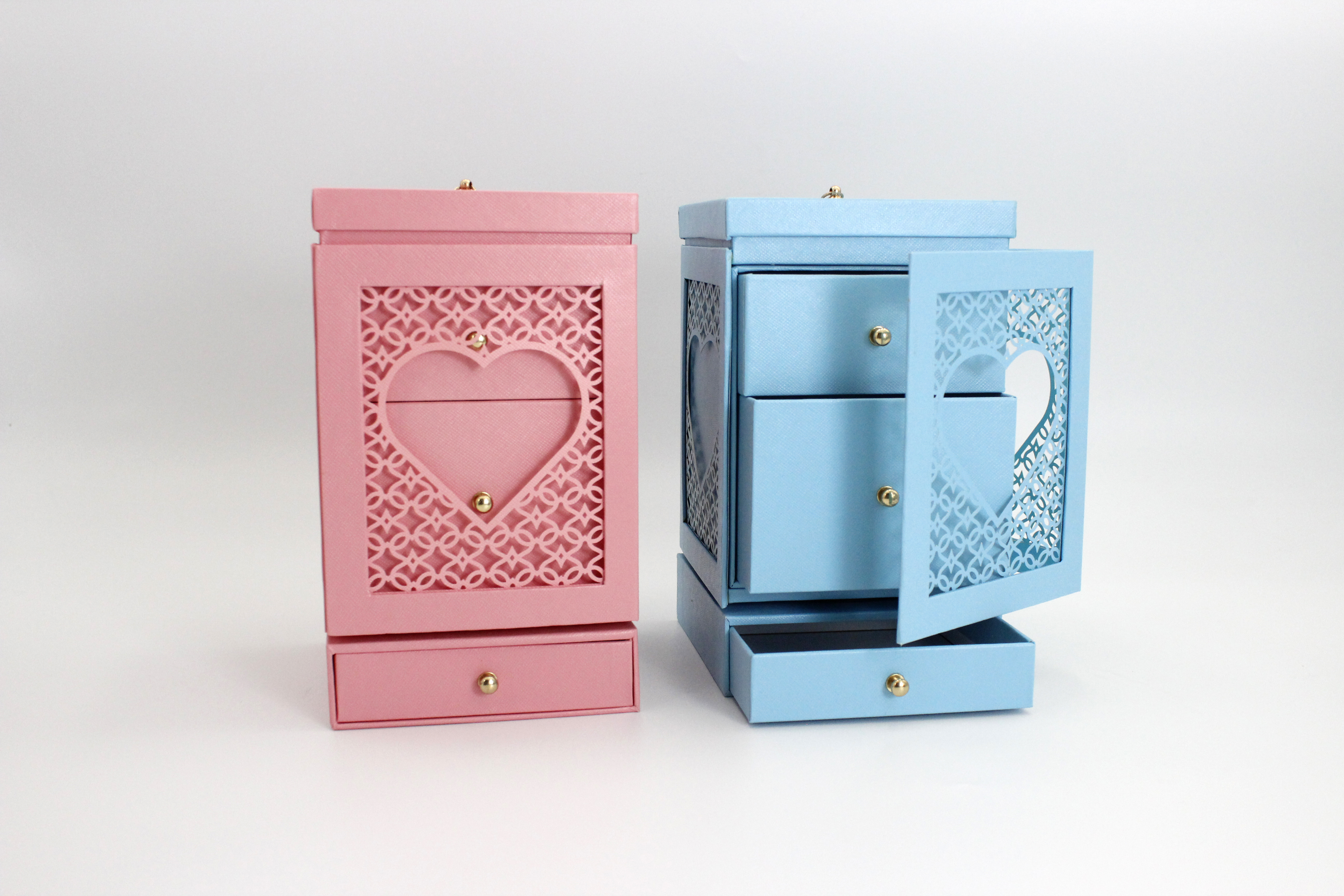
A drawer box is a two-piece sleeve-and-tray structure, and it generates the best social media unboxing results of any format I have tested. One European jewelry brand we worked with reported an 80% increase in organic user-generated content after moving from a top-opening folding carton to a telescoping drawer box with a ribbon pull.
Drawer boxes currently account for roughly 10% of wholesale jewelry box demand, with production cost between $2.40 and $5.60 per unit. The sleeve construction adds complexity — you are forming two separate shells instead of one — but the payoff is the visible slide-and-reveal moment when the customer pulls the tray open.
The tolerance requirement is critical: too tight and the user fights to open it; too loose and the tray falls out during transit. At HAOSUNG PACKAGING, we hold the gap between tray and sleeve at 0.5–0.8 mm on all drawer constructions. This compensates for the 2–4% dimensional drift that occurs with greyboard humidity shifts.
Book-Style Jewelry Boxes Add Narrative to the Wholesale Jewelry Box Mix
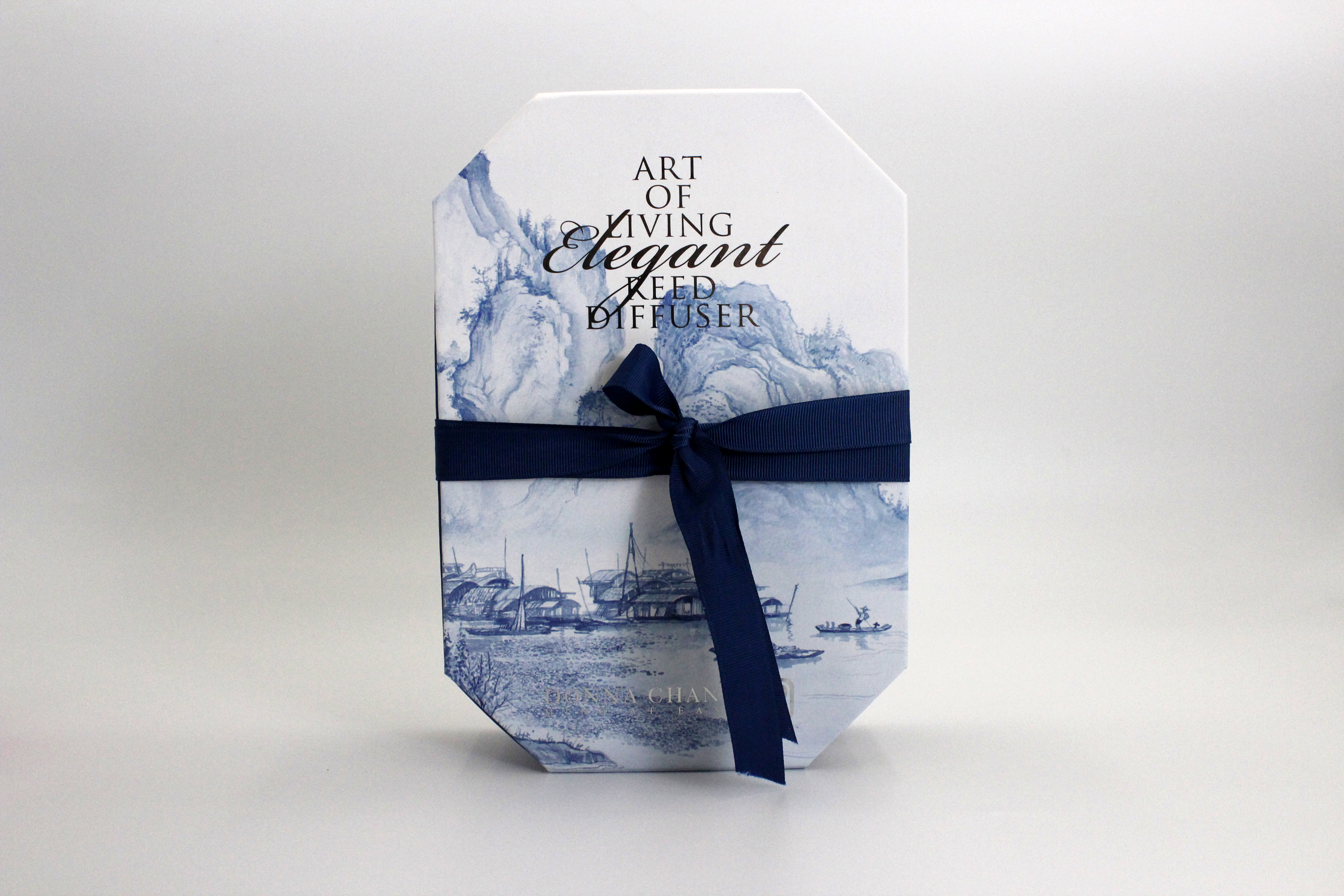
Book-style boxes open like a hardcover, with a spine hinge and a magnetic or ribbon closure on the opposing side. They are particularly popular for bridal sets, anniversary collections, and limited editions where the packaging helps tell a story.
In cost terms, a book-style jewelry box sits between a hinge box and a rigid set-up box — $2.80 to $6.00 per unit at scale. The spine construction adds about 15 minutes of handwork per 50 boxes compared to hinged boxes, which is why lead times run 2–3 days longer. Our standard HAOSUNG lead time for book-style boxes is 12–15 working days including proofing, versus 10–12 days for hinged ring boxes.
The design advantage is interior storytelling. You can die-cut a recess for a certificate on the left inside cover, hold the main piece in a center well, and add a pocket inside the back cover for warranty cards or care instructions. We supplied book-style packaging for a 10-year anniversary collection at a Swiss jewelry house, where the left page held the brand history and the right page presented a diamond pendant.
Display and Tray Boxes Prioritize Retail Over Shipping
For wholesale jewelry box buyers selling through physical counters, display tray boxes are a different animal. The outer sleeve may be simple, but the interior is engineered to hold 6, 12, or 24 pieces in removable foam inserts. This category represents the largest volume among our 27 card-and-tray SKUs, with cost per unit ranging from $1.20 to $4.80 depending on cavity count.
Display trays are not primarily designed for shipping. If you sell both online and in-store, you need a shipping sleeve or a secondary corrugated carton. Industry data shows the average e-commerce jewelry return rate sits around 12%, and an unsecured display tray can double breakage rates. We recommend locking tuck flaps and die-cut foam recesses that hold each piece individually, even when the box is shaken upside down.
At HAOSUNG, we have declined display-tray orders where the client insisted on a "universal" foam pattern. Universal cavities look fine in photos but do not hold cigar bands, tennis bracelets, and stud earrings with equal pressure. Custom EVA or PU foam tooling costs roughly $120 for a die, which adds only $0.12 per box on a 1,000-unit order. Worth every cent.
Eco-Friendly Jewelry Boxes Are Non-Negotiable in 2026
One direct statement: by 2026, a jewelry box made from virgin unrecycled materials without any certified sustainability claim will fail the supplier screening process at most Western buyers. Approximately 68% of retail buyers in the U.S., EU, and UK now require some form of environmental certification from packaging suppliers, with FSC™ certification the common baseline.
The FSC label signals that paperboard, wood pulp, and paper components originate from sustainably managed forests. HAOSUNG PACKAGING holds FSC certificate number FSC-C180570, along with Sedex SMETA social compliance and Disney ILS certification. Our green product matrix includes recyclable Kraft board, Seed Paper Card inserts that can be planted after use, and Fruit Paper — a biodegradable sheet with visible fiber texture that suits both food and jewelry packaging.
An eco-friendly jewelry box does not always cost more. Switching from a white glossy rigid box to an FSC-certified Kraft rigid box reduces material cost by approximately 7–10% because Kraft base stock is cheaper and the exterior coating can be skipped. The real cost driver is water-based versus film lamination: water-based coating costs about 12% more per square meter but is compostable, while polypropylene lamination is not.
Side-by-Side Comparison of the 7 Jewelry Box Types
| Box Type | Cost/Unit (1,000 pcs) | Lead Time | Best For | Weakness |
|---|---|---|---|---|
| Hinged Ring Box | $0.65–$2.80 | 10–12 days | Rings, earrings, daily sellers | Hinge wear after heavy use |
| Rigid Set-Up Box | $3.20–$8.50 | 12–15 days | High-carat, bridal, luxury | Shipping costs 30% higher |
| Magnetic Closure Box | $2.10–$4.30 | 10–14 days | DTC fine jewelry, e-commerce | Magnet strength varies |
| Drawer Box | $2.40–$5.60 | 12–15 days | Social unboxing, gifting | Tolerance sensitivity |
| Book-Style Box | $2.80–$6.00 | 12–15 days | Limited editions, storytelling | Labor-intensive spine |
| Display Tray Box | $1.20–$4.80 | 10–12 days | Retail counters | Not shippable alone |
| Eco-Friendly Box | $1.80–$5.20 | 10–15 days | ESG-driven brands, 2026 compliance | Coating option limits |
HAOSUNG PACKAGING positions differently from the traditional wholesale jewelry box factory: our MOQ is 1 piece, where the industry standard sits at 500–1,000 pieces, and our in-house design team — with 10+ years of experience — provides free structural consultation before you commit any tooling budget.
FAQ
Q: What is the minimum order quantity for wholesale jewelry boxes?
A: The traditional wholesale jewelry box threshold is 500–1,000 pieces per design. HAOSUNG PACKAGING operates a MOQ of 1 piece, allowing independent designers and startups to test a prototype at near-zero risk before scaling to bulk inventory. On a standard ring box at quantity, per-unit cost can drop from $2.80 to under $0.80 depending on materials and finish.
Q: How can I get an FSC-certified jewelry box without increasing my budget?
A: FSC-certified Kraft board is roughly 7–10% cheaper than a comparable virgin coated-grade board, so an eco upgrade can actually reduce unit cost. At HAOSUNG PACKAGING, our FSC-C180570 certification already covers the paperboard we use, so clients do not pay a per-order license fee to display the FSC logo. Orders below 300 units may see +$0.08 to +$0.15 per box from setup amortization, but above 1,000 units eco-friendly materials become cost-neutral.
Q: What is the best material for a luxury jewelry box interior?
A: For true luxury, we recommend 2.0–3.0 mm PU leather over 2 mm EVA foam for delicate items like diamond rings, because it holds the piece securely without scratching. Velvet remains the most economical choice at $0.30–$0.60 per interior insert, but it sheds and flattens under heavy display use. Silk interior offers the smoothest touch experience but costs 40–60% more than velvet and requires careful handling during assembly.
Q: How long does a wholesale jewelry box production run take?
A: A run of 500–2,000 units usually takes 10–15 working days from approved proof to shipment when artwork is print-ready. Book-style structures and complex display trays with custom EVA foams add 2–3 days. During seasonal peaks, lead times can stretch to 20 days, so I advise planning 4 weeks ahead for holiday launches. HAOSUNG PACKAGING offers free sample printing, and our average design-to-confirmation cycle is 3–5 days.
Final Take
Choosing a wholesale jewelry box is never a one-variable decision. The hinge box at $0.65 solves a simple problem, while the rigid set-up box at $8.50 performs a completely different job. The 2026 landscape will reward brands that combine FSC-certified materials with an opening moment worth photographing. My honest recommendation: order one physical sample from two different suppliers, run the 50-cycle hinge test, and put a 2026 sustainability checklist in front of them before you negotiate pricing. If you want to move faster, ask HAOSUNG PACKAGING for a design consultation — no order required.