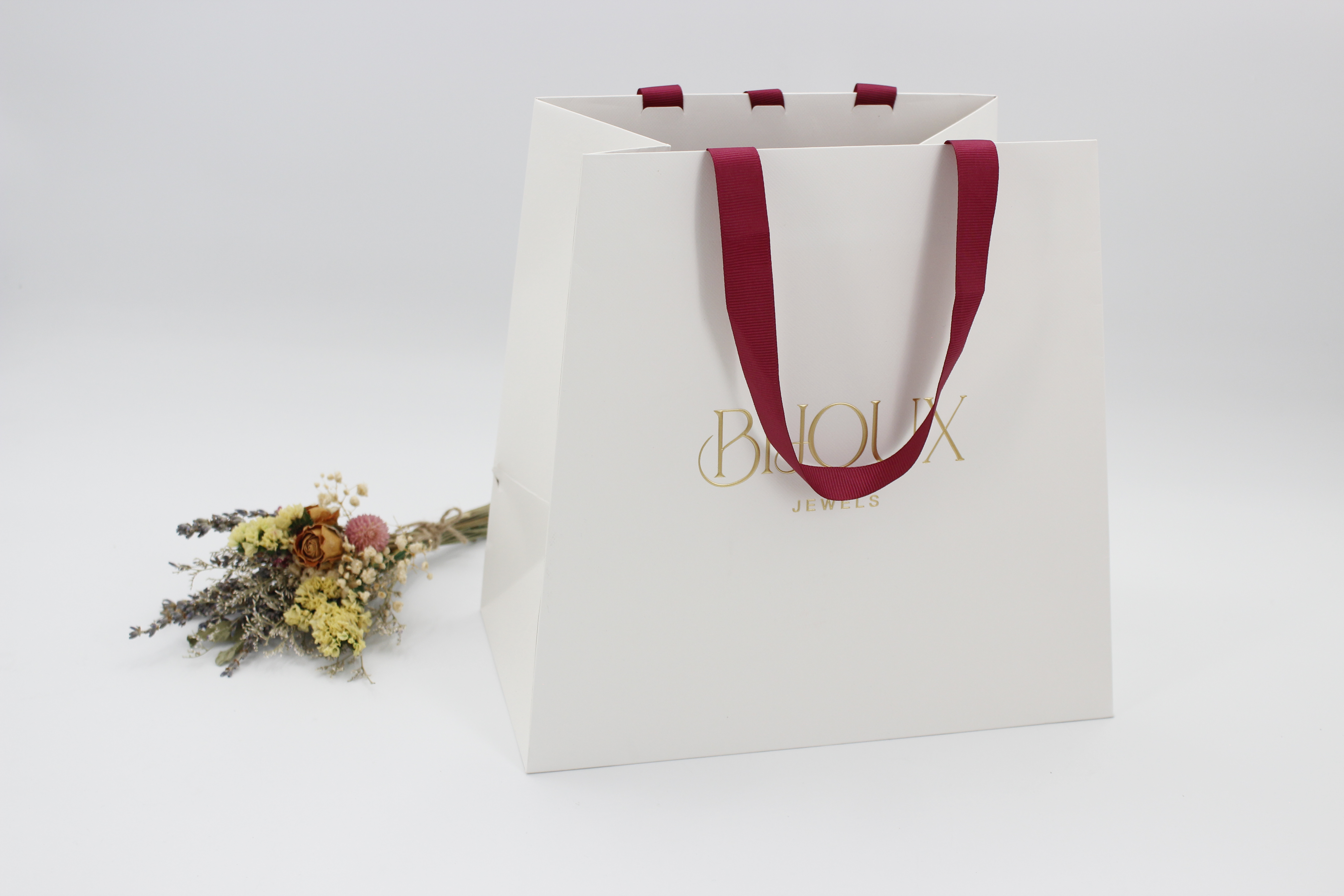
In 2026, jewelry packaging is no longer just a protective shell—it’s a silent salesperson that can lift perceived value by up to 30% and drive social media unboxing shares. If you’re sourcing for a brand, the type of jewelry box you choose impacts everything from per-unit cost to the moment a customer decides to post unboxing content online.
This guide breaks down 10 business-critical jewelry box types, based on our 18 years of manufacturing at HAOSUNG PACKAGING, where every solution balances cost control with unboxing impact. We’ll cover practical differences in cost, materials, and ordering thresholds, so you can match the box to your actual business stage.
1. Magnetic Closure Red Leather Ring Boxes: The E-Commerce Standard for Perceived Value
Conclusion: Magnetic closure ring boxes deliver the highest perceived value per dollar spent, making them the default choice for online jewelry brands competing on premium unboxing.
For direct-to-consumer (DTC) brands selling rings online, this style—often in red or black leather-like material with a soft interior—is the industry benchmark. The magnet creates a satisfying, tactile snap that enhances the experience without adding mechanical complexity.
From a cost perspective, a standard magnetic ring box costs roughly 20%–40% more than a basic cardboard alternative, but the upfront investment influences the buyer’s perceived product worth before they even see the ring. In practice, HAOSUNG sees this design used most frequently by established DTC brands who want an elevated unboxing but need to keep unit cost below the luxury-tier threshold.
A practical tip: request a Pantone-matched exterior to align with your brand color. Most reputable manufacturers, including HAOSUNG, offer custom color matching at minimal or no additional cost when you’re ordering in the hundreds, not thousands.
2. The Classic Book-Style Opening Box: A Proven Structure with Production Efficiency
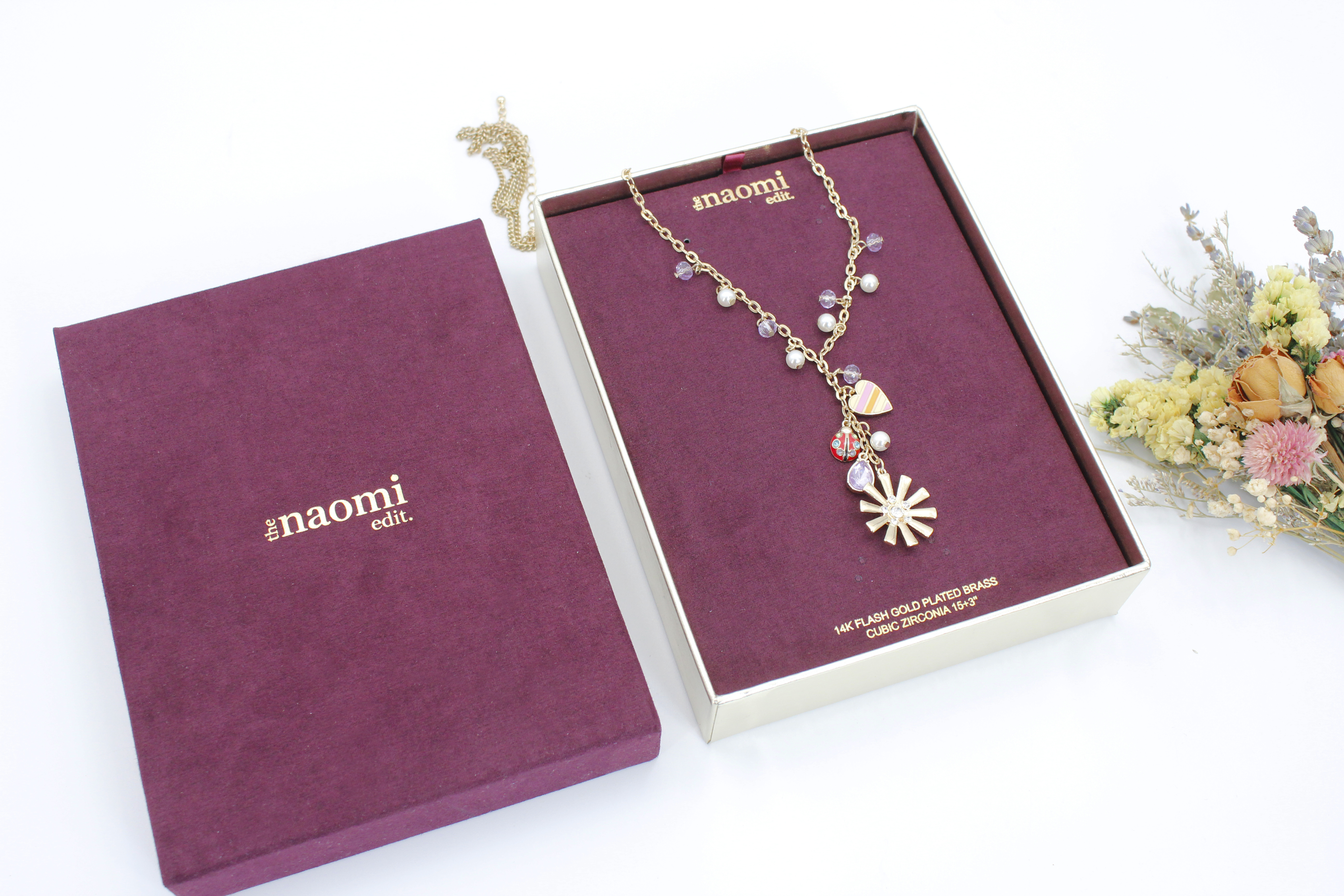
Conclusion: The book-style jewelry box provides a wide, flat display area that is perfect for necklaces and bracelets, while maintaining simple assembly that helps control labor costs.
This form factor is incredibly common for necklaces, where the pendant needs a clear, non-creasing place to lay flat. For the manufacturer, the book-style lid construction is straightforward. It doesn’t require the more complex folding of a rigid drawer box, which translates into shorter production runs and better price stability.
Industry data indicates that this style accounts for roughly 25% of all custom jewelry box orders in the mid-price bracket, particularly from brands selling products between $50 and $300. We recommend this style if your product line features long pendants or detailed charm work that needs a flat presentation.
One word of caution: the hinge area is the most common point of failure. Insist on tear-resistant fabric or leather at the hinge seam. Experienced suppliers like HAOSUNG reinforce this area as a standard quality control check, preventing returns caused by hinge failure after months of customer use.
3. Hinged Clamshell with Foam Insert: The Modular Choice for Batch Shipping
Conclusion: Clamshell boxes with die-cut foam inserts provide a modular solution for multi-piece purchases, reducing shipping damage by up to 30% compared to non-structured packaging.
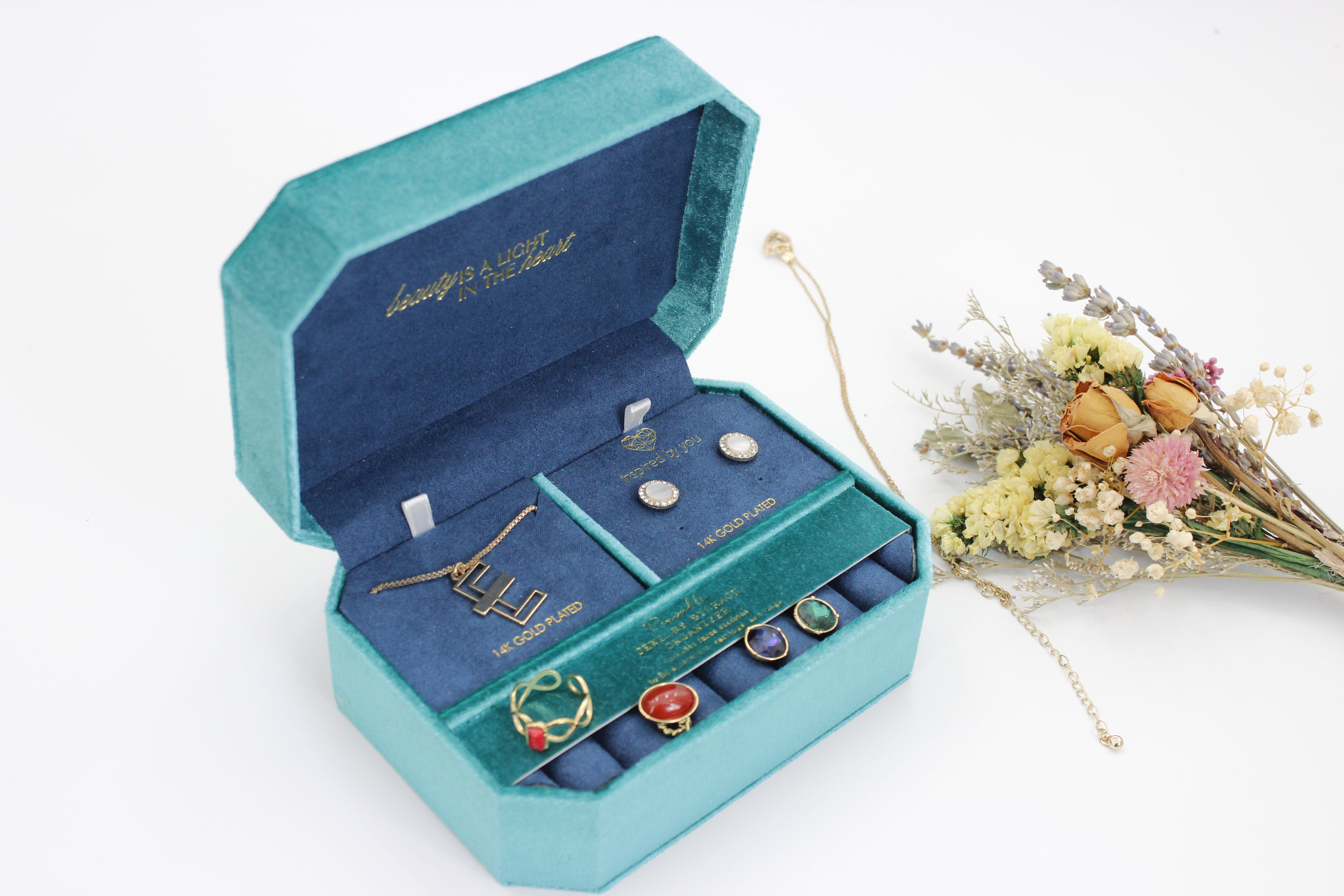
For businesses selling earrings and rings as sets, or for those who need to ship a ring alongside a necklace, the hinged clamshell with a foam insert is highly effective. The foam is precision-cut to cradle each specific product, preventing movement in transit.
The production cost is moderately higher due to the foam die-cutting step, but the reduction in product returns often offsets this. The cost of foam insertion is roughly 15% of the total box cost, a small price to pay for preventing the friction of a damaged product arrival. If your market is gifting—where the buyer is purchasing for someone else—the protective foam also reassures the sender the product will arrive in perfect condition.
4. Luxury Rigid Drawer Boxes: Premium Feel for High-Ticket Items
Conclusion: Rigid drawer boxes offer the smoothest glide and heaviest feel, signaling authenticity and luxury, but they require a higher minimum order due to labor-intensive assembly.
If you sell pieces above $800, the sliding drawer mechanism creates a distinctive, ceremonial opening. The weight of the rigid board stock (typically 2.0mm–2.5mm thickness) communicates substance and durability—a quality that’s hard to replicate with lightweight packaging.
However, drawer boxes are more expensive to assemble. Since each box requires an outer sleeve and an inner tray, the production lead time is often 7–10 days longer than clamshells. At HAOSUNG, we often suggest this structure for clients preparing a seasonal collection, where the editorial feel of the packaging will be central to the product photography and in-store display.
5. Clear Top Acrylic Display Boxes: Bridging E-Commerce and Physical Retail
Conclusion: Acrylic display boxes offer a unique dual-purpose role—protecting the product in transit while serving as a permanent counter display in-store.
For brands balancing a DTC e-commerce site and a wholesale retail presence, the clear acrylic box is a smart compromise. It allows customers to see the actual piece without opening a sealed bag. This is particularly relevant for pieces with intricate enamel work or colored gemstones that don't photograph as vividly as they appear in person.
Acrylic boxes need careful packing because they’re susceptible to scratching during transit. The cost per unit is generally higher than cardboard alternatives, but the after-sales utility of the box can justify the price—many customers repurpose it for travel storage, which extends the brand’s presence in their daily life.
6. Kraft Cardboard Pillow Boxes: The Low-Cost Entry Point for Startups
Conclusion: For independent designers testing a new SKU, kraft pillow boxes require the lowest upfront investment, with order quantities as low as 100-to-500 units.
These lightweight boxes are perfect for small-batch experimentation. They are less rigid, but they do offer design flexibility—brands can print a custom sticker label directly on the kraft surface, creating a unique aesthetic without the cost of full-color custom printing.
The trade-off is perceived value. A pillow box is clearly more affordable than a rigid box. It’s suitable for “everyday” jewelry, like stackable rings or simple stud earrings, rather than high-ticket statement pieces. According to production data, this style’s cost is approximately 50–70% lower per unit than a magnetic closure box, which makes the finance team happy, but marketing teams should carefully evaluate the brand fit before committing.
7. Velvet Pouches with Drawstring: The Practical Interior-Oriented Solution
Conclusion: Velvet drawstring pouches are the most space-efficient packaging choice for retailers who prioritize physical store display over individual branded boxes.
While not technically a “box,” the velvet pouch is an essential part of many jewelry businesses’ packaging strategy. It is the go-to option for wholesale orders where the jeweler might be placing a dozen pieces in a single window display, and it allows the retailer to save space compared to storing bulky boxes.
We now produce custom pouches with a debossed leather label that adds a premium touch. The cost is attractive, but keep in mind the product is not fully protected against hard impacts. This is best used for simpler designs that won’t be jostled directly against hard surfaces. Additionally, pouches can be a great element inside a branded box—a layering technique we’ve seen boost perceived value significantly.
8. Recyclable FSC-Certified Rigid Boxes: Aligning with 2026 Sustainability Mandates
Conclusion: In 2026, opting for FSC-certified rigid boxes is no longer a differentiator; it is a de facto market requirement for selling into the EU and handling North American retail compliance.
The EU’s Packaging and Packaging Waste Regulation (PPWR) is pushing all packaging producers to justify their material choices. Using FSC-certified board—where the paper source is certified by the Forest Stewardship Council—demonstrates a verifiable chain of custody. At HAOSUNG, we hold FSC™ certification (Cert. No. C180570), ensuring box materials are sourced from well-managed forests.
If your brand is exploring ESG (Environmental, Social, and Governance) reporting, the absence of this certification could trigger a supplier audit failure. This is an area where small brands sometimes mistakenly cut corners, only to be blocked from a major retailer’s shelves later. Nearly 67% of US consumers say they prefer brands that use recyclable or compostable packaging, per recent industry polls. This is why we integrate sustainability into our cost conversations early.
9. Seaweed Paper Card Wraps: The “Experience” Box for Social Media Campaigns
Conclusion: Hand-folded wraps made from seed paper or seaweed fiber can transform a simple product into a memorable unboxing that drives user-generated content (UGC) with minimal packaging cost.
This niche solution is not for every SKU, but it is highly effective for limited edition launches or value-add gift-with-purchase items. A branded wrap—made from a biodegradable, seed-infused paper—can be printed with a storyline or a planting instruction, creating a post-unboxing “second life” for the packaging. In a 2025 beauty client campaign, this approach generated more than 5,000 natural UGC notes on Xiaohongshu within the first week.
Because the material is relatively newer, you will need a supplier who already has this in their fiber library, not a custom mill run. It’s an excellent way for a brand to tell a sustainability story without the higher cost of custom 100% recycled plastic-free lamination.
10. Recyclable Board with Spot UV: Balancing “Eco” Look with Modern Graphics
Conclusion: Recyclable board boxes with spot UV gloss are the sweet spot for brands wanting an “eco” aesthetic without the rough texture of 100% uncoated kraft.
Many brands, particularly in the CBD and natural cosmetics sectors, have adopted this look. The result is a matte, craft-look exterior with high-gloss targeted details (like the logo or a geometric pattern). This contrast is visually strong, and it photographs well—critical for Instagram-centric buying behavior.
The production cost is moderate, and because it relies on standard board, it’s compatible with lower minimums. At HAOSUNG, this is a common starting point for new DTC brands in their first 12 months, especially those producing a small batch of 100 to 300 units to test the market. This product directly cuts against the misconception that “eco” must mean “expensive” or “plain.”
Comparative Table: Key Data Point for Business Decision-Making
| Box Type | Estimated Cost per Unit (Relative) | Minimum Order Quantity (MOQ) | Protection Level | Perceived Quality | Production Lead Time |
|---|---|---|---|---|---|
| Magnetic Closure Red Leather Ring Box | Medium | 100–500 pcs | High | High | 15–20 days |
| Book-Style Opening Box | Medium | 100–500 pcs | High | Medium-High | 15–20 days |
| Hinged Clamshell with Foam | Medium-High | 200 pcs | Very High | Medium-High | 15–20 days |
| Rigid Drawer Box | High | 500 pcs+ | Moderate | Very High | 25–30 days |
| Clear Top Acrylic Display | High | 100 pcs | Moderate | High | 20–25 days |
| Kraft Pillow Box | Low | 100 pcs | Low | Medium | 10–12 days |
| Velvet Drawstring Pouch | Low | 500 pcs | Low | Medium | 10–15 days |
| FSC-Certified Rigid Box | Medium-High | 300 pcs+ | High | High | 20–30 days |
| Seed Paper/Card Wraps | Low-Medium | 1,000 pcs | Low | Medium | 15–20 days |
| Recyclable Board with Spot UV | Medium | 100–300 pcs | Medium-High | High | 15–20 days |
Note: MOQ refers to typical minimums at HAOSUNG PACKAGING, which offers 1-piece sampling to mitigate early-stage risk. Costs vary by dimension, quantity, and print effects.
FAQ: Sourcing Jewelry Boxes Effectively
Q: What is the biggest cost driver in a jewelry box order?
A: The main cost driver is the internal fit—specifically, the foam insert or molded pulp tray that secures the product. On many standard orders, the high-quality paperboard itself only accounts for 40–55% of the total unit cost; the rest comes from foam cutting, adhesives, and labor in the assembly steps.
Q: Can I order 100 custom jewelry boxes for a first production run?
A: Yes. At HAOSUNG PACKAGING, we accept custom jewelry box orders starting from 1 unit for sampling and 100 units for small production runs. This flexibility allows emerging jewelry designers to test packaging with home-sized e-commerce order volumes, rather than committing to the 500-unit minimums common at larger traditional factories.
Q: Which type of box should I choose for an artisan gold ring priced at $500?
A: For high-value gold pieces, we recommend a magnetic closure box or a hinged clamshell with a foam insert. The secure closure and cushioning provide better protection and communicate the product’s value. A book-style box is also acceptable for necklaces, but it’s crucial to verify hinge strength. If you’re presenting the ring at a single retail counter, a clear top acrylic display box offers a unique advantage.
Final Takeaway & Next Step
The jewelry box you choose is a direct reflection of brand positioning. If you need to tick the cost box, start with a kraft pillow box or a velvet pouch. If you’re entering a premium retail ecosystem, invest in FSC-certified rigid boxes or custom hinged clamshells with quality foam.
For your next project, work with a supplier who understands that manufacturing is about practicality, not just luxury. HAOSUNG PACKAGING combines 18 years of production expertise, the German Heidelberg press for precise color accuracy in the ΔE 1.5 range, and flexible order quantities from 1-piece samples to million-unit runs, offering the unique ability to prove your packaging before you over-invest.